
Signs It’s Time to Replace Your Furnace: Why Most Homeowners Replace Their Furnace Too Late

Ohio homeowners are used to harsh winters, which is why you don’t have to explain to them the importance of a well-maintained furnace. But no one wants to hear that it’s time to replace an aging unit.
To help you recognize the signs it’s time to replace your furnace, we’ve put together the following guide.
HOW LONG DOES A FURNACE TYPICALLY LAST?
Residential furnaces over 15 years old have surpassed their best years and should be replaced before repairs become more frequent and costly. Despite the common rise in cost and frequency of repairs, most people delay replacing their aging furnace until after it is 18–22 years old and even longer.
WHY HOMEOWNERS DELAY FURNACE REPLACEMENT
Despite all of the classic signs like rising energy bills and frequent repairs—homeowners postpone the inevitable replacement beyond the furnace’s lifespan until they're forced into an urgent decision. This delay often leads to a worst-case scenario: calling for an emergency replacement for their failing furnace in the middle of a freezing Ohio winter.
These are some of the most common reasons people put off a furnace replacement as long as they can.
STICKER SHOCK
The upfront cost of a new furnace typically ranges from $2,824–$6,887 or more, depending on how extensive the installation is, the desired AFUE (Annual Fuel Utilization Efficiency) rating, whether or not it has a heat pump, etc.
When faced with a substantial expense, the homeowner’s natural reaction is to postpone final decisions despite the likelihood that the long-term cost of repairing and operating their aging system will exceed their investment in a new system.
IT STILL WORKS
“If it isn’t broken, don’t fix it.”
Everyone has said this to themselves one time or another. But the truth is, your aging furnace has to run longer to provide the same level of heat, and repairs are only going to get more expensive.
FEAR OF BEING UPSOLD
Everyone who’s experienced high-pressure sales becomes reluctant to reach out for advice about a large home purchase. Homeowners are wary of being taken advantage of and paying more than they intend to.
DECISION FATIGUE
It’s easy for a homeowner to feel overwhelmed by the range of furnace designs, efficiency ratings, and what design benefits are truly worth the cost. The dizzying range of options is just another reason for them to put off trying to understand the industry jargon.
WAITING FOR THE RIGHT TIME
Homeowners who have come to grips with the fact that they need a new furnace often just want to get through the winter so they can make a low-pressure decision and take advantage of off-season prices. Unfortunately, this contributes to the reason so many people get stuck needing an emergency installation during the coldest part of the winter season.
Need to find out whether you need a furnace repair or replacement? Talk to us about our heating services.
THE TOP 7 WARNING SIGNS OF A FAILING FURNACE
Paying attention to the early warning signs of a failing furnace can save you from costly emergency repairs.
1. RISING ENERGY BILLS AND EFFICIENCY LOSS
The gradual increase in monthly heating costs is a direct sign of wear on critical components like the heat exchanger, blower motor, and burner.
2. UNEVEN HEATING THROUGHOUT THE HOME
Noticeable hot and cold spots throughout the home indicate a problem with the blower motor or ductwork connections, or an ineffective heat exchanger.
3. FREQUENT CYCLING AND SHORT RUN TIMES
An aging furnace may turn on and off repeatedly in brief intervals without completing proper heat cycles, accelerating wear and damage to components. This often happens because the unit is overheating and shuts down in a protected mode.
4. STRANGE NOISES DURING OPERATION
Rattling sounds could point to loose components or deteriorating internal parts, while grinding sounds may indicate motor problems that can lead to complete system failure. Unusual banging, clanking, or booming sounds can indicate heat exchanger issues, while squealing or screeching may be a sign of worn blower motor bearings or loose belts.
5. UNUSUAL ODORS FROM THE SYSTEM
Strange smells can be just as important to pay attention to. A burning smell might mean overheating components or electrical issues. A musty odor could be a sign of mold growth in the ductwork, and the smell of rotten eggs could be a serious gas leak signalling the need for immediate evacuation.
6. MORE FREQUENT REPAIR CALLS
Occasional maintenance is normal, but several repairs in a year are a sure sign components are reaching their end.
7. DIFFICULTY STARTING OR MAINTAINING OPERATION
Multiple attempts to ignite or failure to start consistently could mean an issue with the pilot light, thermostat, ignition system, or other components, causing shutdowns before the furnace fully starts to cycle.
Getting worried you may have waited past your ideal furnace replacement time to make a decision? Talk to us about our specials, because the best time to replace your furnace is before energy bills and growing repairs add up.
FURNACE REPAIR VS. REPLACE
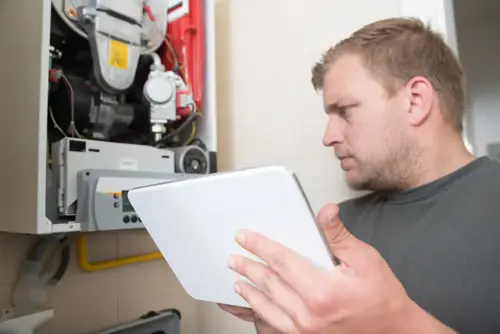
How can you know exactly when it’s the right time to replace your aging furnace?
WEIGHING THE COST OF REPAIRS
If your furnace needs repairs that cost more than 25% of the cost of replacing the unit, there’s a good chance you’re better off investing in a new unit that will save you in monthly energy costs.
This is even more compelling if you’re weighing the cost of the most expensive replacement parts. Chances are good there are still multiple other parts wearing down, and ultimately, you can’t justify paying into a failing unit.
WHEN REPAIR CAN MAKE SENSE: THE RIGHT CIRCUMSTANCES
If your furnace is 10 years old and well-maintained, it may be worth investing in repairs, especially if they are minor.
Quality maintenance helps reduce wear and prevent failing components. So, even though some minor repairs are inevitable, it makes sense to get several years out of a well-performing unit. If the same unit hasn’t been well-maintained, this is a trickier decision and may require an expert’s input about what potential larger component failures could be looming.
WHEN REPLACEMENT MAKES THE MOST SENSE
Replacement will almost always be the right solution if your unit is more than 15 years old and starting to show signs of underperforming.
Not only will an old furnace become increasingly costly in monthly energy bills and parts, but new furnaces have substantially higher efficiency. Not only can you avoid overspending to keep your furnace running, but you can sleep a little better knowing you have a reliable unit, while also paying less to keep cozy. Modern furnaces can operate at 90–98% AFUE, meaning the unit is using nearly 100% of the fuel energy to heat your home.
Should you replace your furnace and A/C at the same time? Chances are yes. But talk to our experts to be sure.
DON'T WAIT FOR YOUR FURNACE TO FAIL
Not sure whether your furnace is ready to be replaced? If your furnace is more than 15 years old, it’s not worth leaving the next harsh winter up to chance. If you’re in our extensive service area, schedule a service visit so we can assess the best solution to keep your home warm.
Our experienced technicians will assess the unit’s condition and explain whether repairs or replacement are in order. Nothing but honest guidance and zero high-pressure sales tactics.
Learn about our heating installation services and call our friendly experts to determine your best options today.